Myths
Myths versus official wording.
If two official pages disagree, the myth is not settled by picking the tidier year.
Each myth is answered with official wording, not with a blended average or a remembered first.
Myth: Airfix’s first kit was the Spitfire
Fact: Airfix’s history page calls the 1952 Golden Hind “our first ‘true’ Airfix kit.” The famous ‘BTK’ Spitfire, on the same page, was launched in 1953. [source] A 1949 TE20 promotional model, later sold in kit form, is also official — and is still not the first ‘true’ kit in Airfix’s wording.
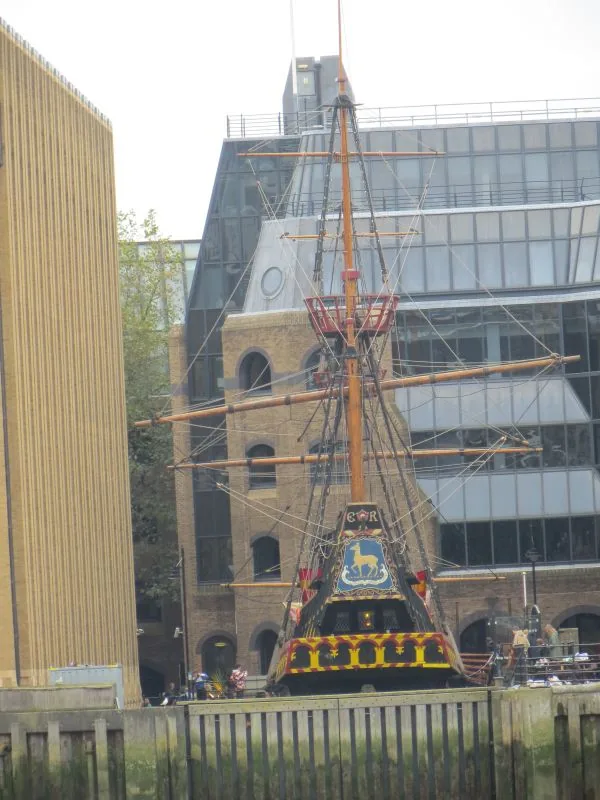
Myth: the 1949 tractor and the 1952 Golden Hind are the same ‘first’
Fact: they are two official events on the same Airfix history page, kept three years apart, with only the Golden Hind given the phrase “first ‘true’ Airfix kit.” [source]
Myth: every official history agrees who invented the plastic kit, and when
Fact: Revell’s UK page calls 1947 in Venice, California, “the birth of plastic model making.” [source] Airfix calls itself the oldest UK manufacturer of scale plastic model kits, producing for the mass market since 1952. [source] Tamiya dates its first all-plastic kit to May 1960. [source] This desk quotes all three.
Myth: the Hornby name on a 1909 Meccano set means the first Hornby train dates from 1909
Fact: Hornby says the name first appeared in 1909 on an educational Meccano set. The first railway product was 1915’s ‘Raylo.’ The Hornby name was not used to market a loose-track model railway until the Clockwork Train of 1920. [source]
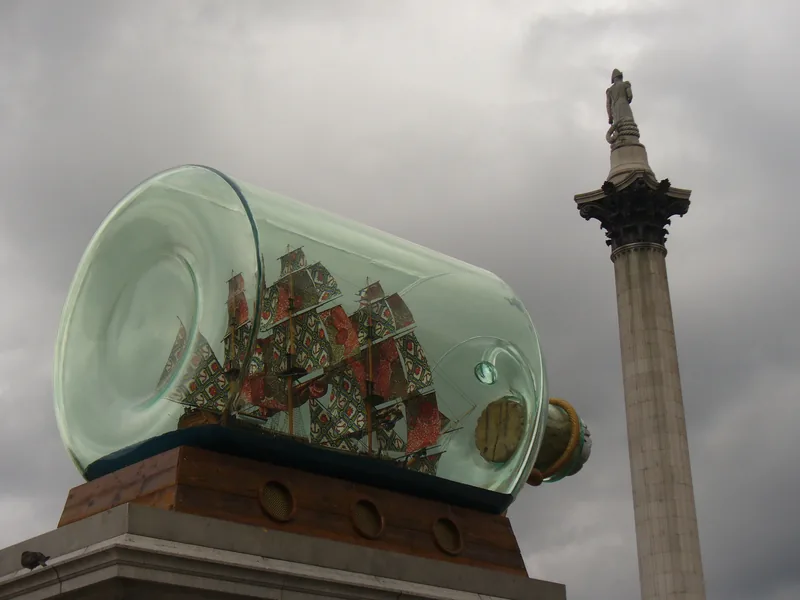
Myth: we know how Shonibare got the ship in the bottle, because the typical method is well known
Fact: Royal Museums Greenwich describes the typical nineteenth-century technique, and says Shonibare’s method is “shrouded in secrecy.” [source]
Myth: a photograph of a real Spitfire, a Golden Hind replica, or a Ferguson TE20 is a photograph of the kit
Fact: those photographs on this site are labelled as the real subject or replica in the file caption, plus a clear note that they are not the kit. A boxed Airfix Cutty Sark in a museum collection is a historic kit, credited as such, not a listing for sale.
Myth: the 1:1 ‘Airfix’ Spitfire proves the kit was released in 1955
Fact: the Commons file caption says the fibreglass replica represents the original 1:72 Airfix Spitfire kit “as released in 1955.” Airfix’s history page says the famous ‘BTK’ Spitfire was launched in 1953. [source] Both wordings are quoted; neither is silently preferred.
Enjoyed a desk of official kit histories, unblended firsts, and a practical workbench?
No pop-ups. No intrusive advertising. Just interesting stuff. A little support helps the next ReallyByte site get built.