Recognition
A model you could view from any angle.
Official museum records of wartime recognition models — and a 1940 case of one aircraft being taken for another.
Some models were not made to stand in a cabinet. They were made so that an outline, from any angle, could be named in time.
The Imperial War Museums hold a recognition model of an Aichi B7A Ryusei (Grace), catalogue number MOD 851, with the inscription 52/791. The physical description is brief: “Simple, solid recognition model.” The dimensions, for the whole object, are height 4 cm, length 16 cm, width 19.5 cm. The related period is the Second World War, for both production and association. [source] The IWM record notes that collections information is never finished, and that new information can change what is known about an object.
The RAF Museum’s record for a Messerschmitt Bf 110 Recognition Model — object number 75/M/245, in Hangar Five — says this is a German-made model of a Second World War Bf 110 “used to train aircrew, particularly pilots and gunners, in the vital skill of aircraft recognition.” It was made by Wiking, “a model company still in existence.” [source]
The same RAF Museum record is blunt about why the skill mattered: “Some aircraft were easily confused in the heat of conflict. On 15 August 1940, a Blenheim was attacked by Spitfire pilots when they mistook it for a German Junkers Ju 88.” Personnel spent many hours studying photographs or drawings, “and illustrated playing cards added some fun to the process.” Models “were often hand-made by RAF personnel in their spare time and were particularly useful as they could be viewed from any angle.” [source]
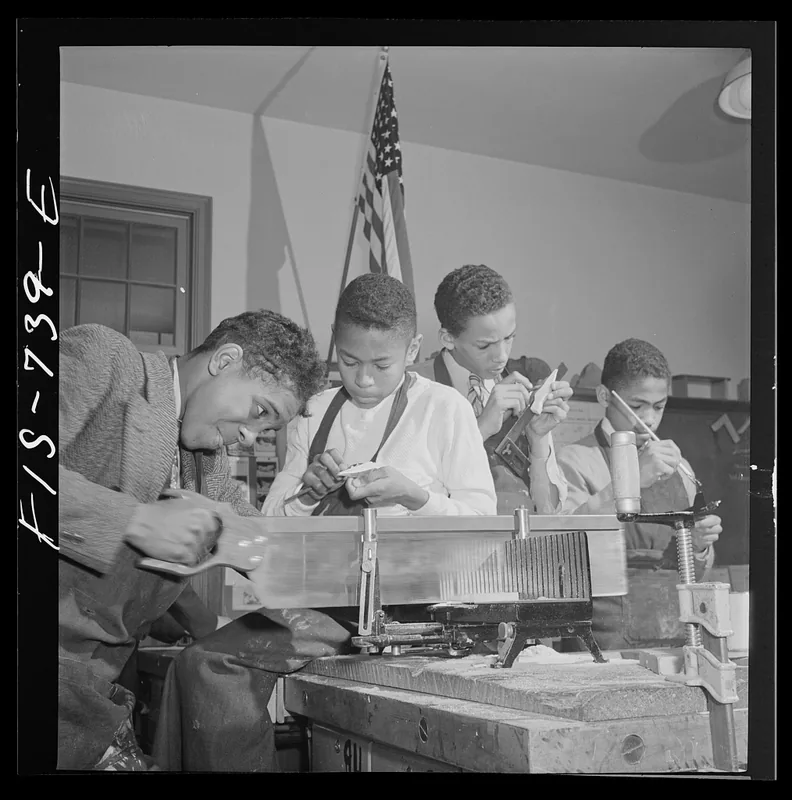
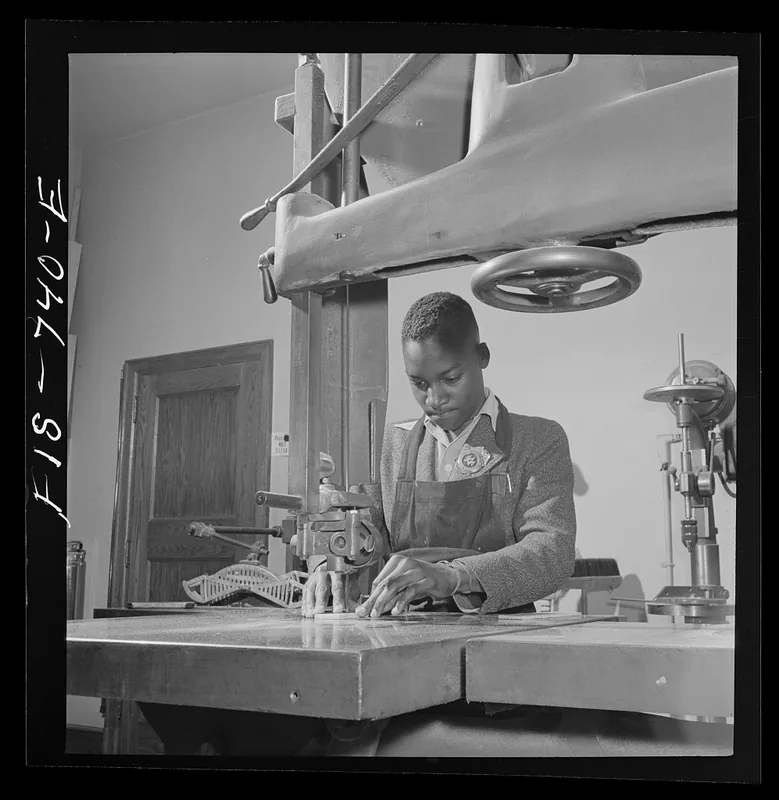
The two workshop photographs on this page are official U.S. government stills by Marjory Collins, March 1942, taken at Armstrong Technical High School in Washington, D.C. Their file captions say the students were “making model airplanes for the U.S. Navy.” This desk does not promote those stills into IWM or RAF recognition-model evidence. They show wartime model-making for the Navy, in the wording of the caption.
Enjoyed a desk of official kit histories, unblended firsts, and a practical workbench?
No pop-ups. No intrusive advertising. Just interesting stuff. A little support helps the next ReallyByte site get built.